
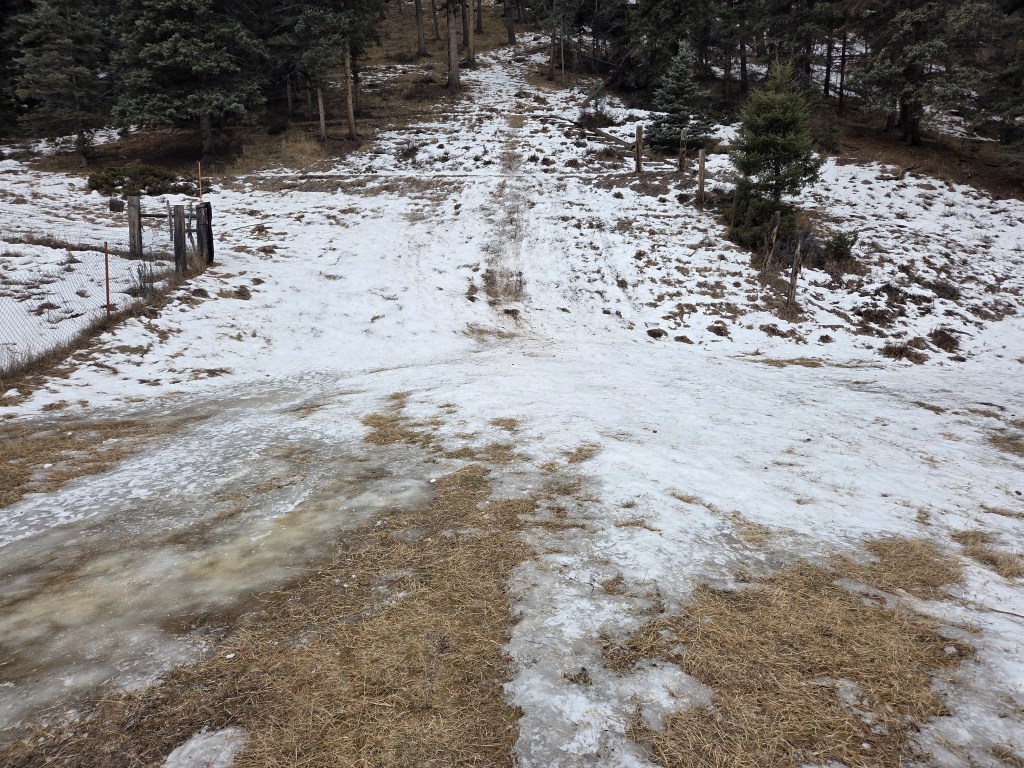
Today, after several weeks of careful recovery from an ankle injury, I tentatively set out on my first trail run in far too long. As I walked to my usual starting point, I stopped to slip on my micro-spikes. Then, I looked up and spotted the area that’s typically buzzing with tourist families sledding down the snowy slopes. For those who don’t know, I live in a small ski town nestled in the Rocky Mountains of the USA. As I write this on New Year’s Day afternoon, we’re starting to wind down from the hectic holiday rush of Thanksgiving, Christmas, and New Year’s, easing into the colder, quieter depths of ski season.
If you’ve been following the weather news, you’ll know we’re enduring an absolutely dreadful winter for skiing—warmer-than-normal temperatures and one of the lowest precipitation totals in years. The sled hill looked atrocious: thin, super-hard-packed snow striped with exposed dirt, ending in a landing zone of standing water, ice, and patchy grass. Yet, there was clear evidence of heavy use along that 50-foot path. I can only imagine the wild, bumpy thrill—or peril—of hurtling down it!
Why share this story? It highlights the deep-rooted traditions of the tourists who return to our town year after year, some for generations. I’m a firm believer in tradition, but sometimes we must be willing to reevaluate it, even if just for a season or two. Tradition acts as a reliable guide, drawing from what has worked in the past. On the sled hill, it’s brought joy to countless people over the years. But in a brutal season like this, with such poor conditions, we’re seeing more injuries—likely far more than get reported. Some from embarrassment, others from that tough “shake it off” mentality. Why don’t people recognize the risks they’re imposing on themselves, their kids, or grandkids? Part of it stems from sheer stubbornness, but I suspect much comes from the comfort of routine: “We’ve always done it that way!”
In my early adulthood, working first in a nonprofit organization and then in financial services, I rarely encountered this mindset. Sure, the nonprofit was 10 to 20 years behind in management techniques, but when I started as a ski patroller, I kept hearing that phrase: “We’ve always done it that way.” Remarkably, the ski patrol and ski school teams strive to stay cutting-edge. This lack of organizational self-reflection points not just to tradition, but to rigidity and an unwillingness to adapt.
That said, changing things—whether processes or materials—simply for the sake of change can be equally misguided. In my experience, those pushing such shifts often prioritize their own agendas over the organization’s goals or outcomes. Tradition can guide us wisely, but if excellence (and safety) is the aim, we achieve better results through a cycle of action, assessment, and reassessment. In a cheeky nod, this echoes the Japanese philosophy of Kaizen or the Deming-Shewhart Cycle: Plan, Do, Check/Study, Act. Don’t cling rigidly to tradition’s guidance, but also avoid chasing change—or even deconstruction—for its own sake.
Still, that doesn’t solve the sled hill dilemma. Humans will be humans. Signs rarely work, especially in tourist spots. I’ve seen towns and businesses clutter areas with so much signage that even diligent readers get lost in the noise. What’s happens here is benign neglect—letting people learn from their choices. Years ago, someone padded a fence post, later adding a bright-colored pole. In our litigious world, this hands-off approach might be safest: no one claims jurisdiction. Folks self-rescue or call emergency services for the worst. Has tradition served them? Has benign neglect? My take: neither. As in nature, people are left to their own devices—wherever that leads. What traditions in your life might need a fresh look?


Leave a Reply