
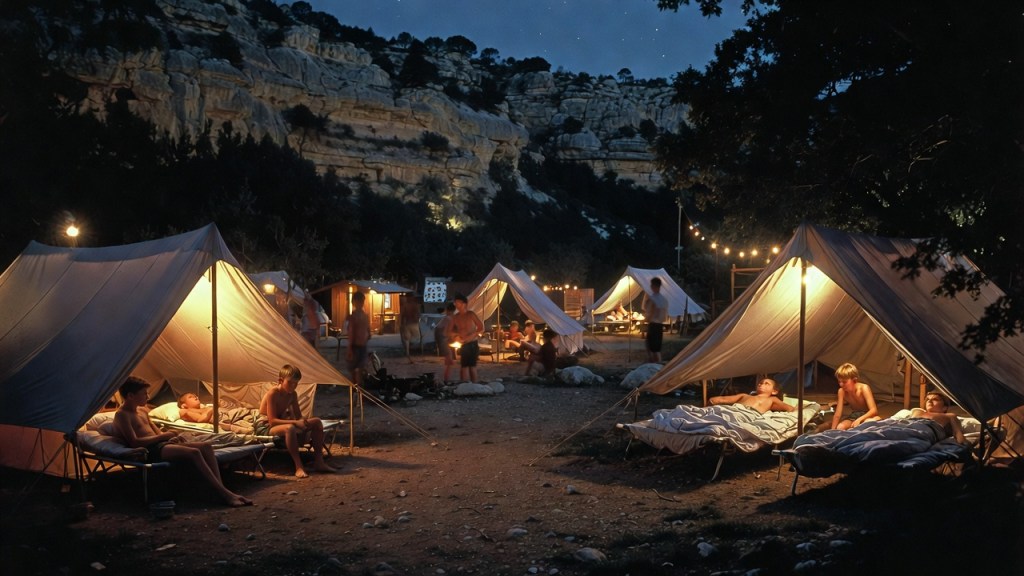
With much of the country hunkered down against a major winter storm this weekend, it might feel premature to talk about summer camp. But trust me—plenty of young boys and girls are already daydreaming about lazy days splashing in creeks, riding horses, unleashing their creativity in craft lodges, and hiking winding trails. And don’t forget those muggy nights whispering secrets to tentmates before drifting off to sleep, sprawled out sweating on top of sleeping bags.
I have incredibly fond memories of the summers I spent first as a camper, then as staff, at Bear Creek Scout Reservation near Kerrville, just outside Hunt, Texas. Those experiences not only shaped the early chapters of my novel, The Long Walk Home: When the Power Dies, but also influenced my lifelong interests and who I became as a man, husband, and father. In the book, I drew heavily from those hazy, carefree days of my pre-teen and teenage years. I also borrowed elements from the many summer camps scattered across Texas’s Hill Country around Kerrville—places like Camp Stewart, Camp LaJunta, and Camp Rio Vista. (Their girls’ camp counterparts actually outnumber the boys’ camps by quite a bit.) Every summer camp I’m familiar with provides packing lists—and if you’ve been following my blog for a while, you know I’m a huge fan of lists. I’ll dive into my thoughts on those in a future post.
My own memories stand out because they’re rooted in Boy Scout summer camps, shared by countless young men like me. To round out the “classic” summer camp vibe in my writing, I drew from conversations with people who’d attended traditional camps as campers or staff, as well as those who owned and operated them. Many Hill Country camps weave in an element of faith—largely Protestant Christian—but others stem from organizations like the YMCA, Girl Scouts, or similar service groups. Specialized camps focused on sports, animals, theater, music, cheerleading, STEM, and more were just emerging when I was a teenage staffer at Bear Creek.
Each camp has its own unique character and level of facility sophistication. Most traditional and service-organization camps offer swimming, with many providing access to canoes, kayaks, or rowboats. Craft lodges echo with the thwack of rawhide mallets on leather embossers and burst with the vibrant colors of ceramics. Dotting the Hill Country landscape, you’ll also find tennis courts, volleyball and basketball courts, equestrian trail rides, archery ranges, rifle ranges, ropes courses, and even the occasional golf green.
For many kids, summer camp marks their first real time away from family—an adventure that can span one week to a couple of months, depending on the camper’s age and the camp’s offerings. Day camps exist too, but they’re usually geared toward younger children, urban settings, or specific competitions.
My own camp experience felt a bit more rugged, which makes sense for a Boy Scout setup in the 1980s. As campers, we slept in Baker tents on cots. Some boys packed footlockers, others duffel bags, while most in my troop—including me—used frame packs. Nights were steamy, so we often dozed on top of our sleeping bags. Each campsite featured a cinder-block outhouse with a cold-water shower on the flip side. Boys like me showered regularly, but others held out until the night before departure. (The parent volunteers hauling us home refused to let any unwashed kid in the car—for reasons even a tween could grasp.) While most troops ate in the dining hall, a few adventurous ones crossed the limestone canyon bisecting the camp to cook their own meals over campfires. Some brought cooking gear from home; others borrowed pots and pans from the commissary. Meals mirrored school cafeteria fare, served at square tables seating eight boys. For picky eaters, there was always commodity peanut butter and jelly as a backup.
Our days buzzed with activity after activity, mostly centered on merit badges like ecology, nature, wilderness survival, first aid, swimming, canoeing, and riflery. Lessons unfolded on picnic benches under canvas tarps. Back then, we also had simpler skill awards with their own dedicated area. Free time meant chilling in your campsite, signing up for swimming, canoeing, sailing (at another camp called Lost Pines), shooting, or knocking out merit badge homework. Bookending the week were opening and closing campfires, packed with stories, skits, and special ceremonies.
Some boys applied to become Counselors in Training (CITs) at 14 or 15. It was a volunteer gig, rewarded with a staff T-shirt and trading-post credits—often cashed in for ice cream. CITs bunked in staff quarters (eight to a room), ate with the troops, and stayed just two weeks, typically adjacent to their own troop’s session.
Once I joined the camp staff, we committed to the entire summer. We shared screened rooms with three other teenage boys, arranged around an asphalt courtyard with a offset shower house. We ate together in the dining hall, were expected to participate in the campfires, and got time off—weekends plus Wednesday evenings. We could head out after the closing campfire and return by Sunday night.
This Scout camp backdrop deeply influenced my depictions of Tommy and Charley’s camp adventures in the book. I wove in more permanent structures I’d seen at traditional camps during later visits. Stepping away from Scouting means losing the built-in structure of merit badges and achievements, but you still dive into those thrilling activities I mentioned. One thing we missed was the progression as boys aged up—gaining more responsibility and rewards at each level. In my writing, I aimed to capture that, blending the pure joy of summer camp with the awkward thrill of early-teen social dynamics.
What was your summer camp experience like? If you didn’t attend one, did you have another pivotal summer adventure that helped you navigate life as a young teen?
 Michael H. Ritterhouse
Leave a comment