
Survival Lessons from the Airport
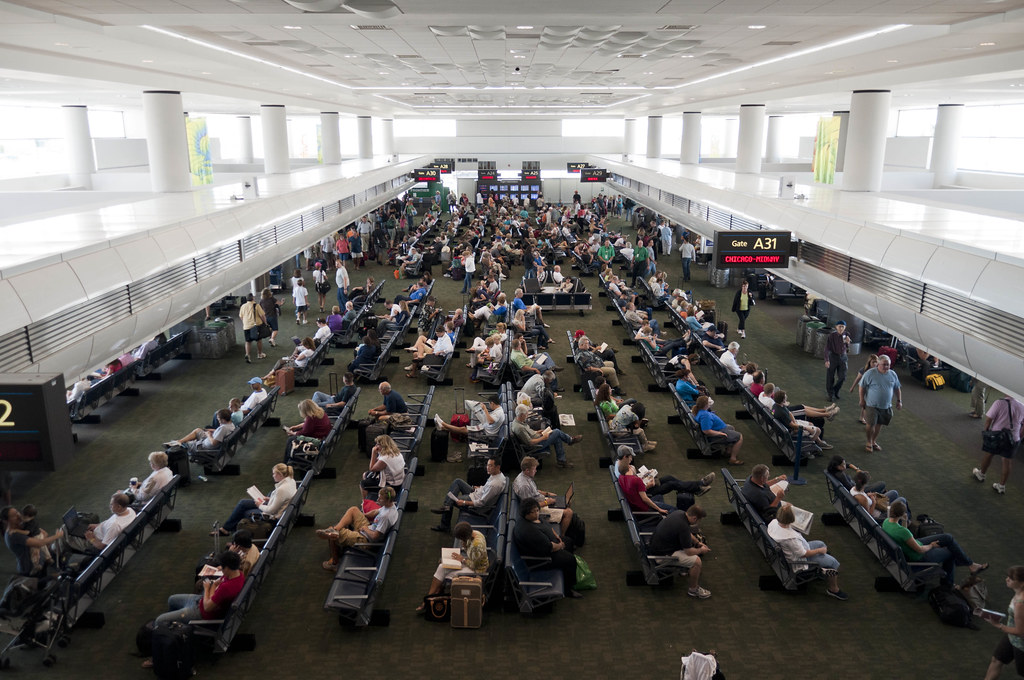
In The Long Walk Home: When the Power Dies, we meet fourteen-year-old Tommy as he navigates Denver International Airport, waiting for a connecting flight from San Antonio to Sacramento. His world, along with everyone else’s, is thrown into chaos when all electrical power abruptly fails. Tommy’s reactions, and those of the people around him, set the stage for the challenges that unfold throughout the novel.
Imagine being fourteen years old—whether you are now or it’s a distant memory. How would you respond in a crisis? What do public safety experts recommend? How do we navigate the unpredictability of strangers’ actions or recover from poor decisions?
Tommy, an outdoorsy kid, is returning home after his first year as a senior camper at a Texas Hill Country summer camp, where he got his first taste of backpacking without his parents or younger brother. He’s hooked. Enthralled by wilderness survival, he’s read How to Stay Alive in the Woods by Bradford Angier, a comprehensive guide to surviving in the wild. But this knowledge feels less useful in one of the world’s largest airports when the power goes out. Instinctively, Tommy looks to adults for guidance—gate agents, airport staff, and the parents of a girl his age.
The United States Federal Emergency Management Agency (FEMA), through its Ready.gov website, provides straightforward advice that aligns with other emergency preparedness guidelines. For power outages or major disruptions, FEMA emphasizes preparedness, even when away from home. Key recommendations include maintaining a mobile emergency kit, keeping electronic devices charged, and practicing situational awareness—staying informed, watching for hazards, monitoring environmental challenges, and tracking food and water supplies. FEMA also advises staying in contact with family and friends, if possible, and continually seeking updates.
Without spoiling too much, Tommy is reasonably prepared for a fourteen-year-old, partly due to luck. Early in the story, he meets the Browns, a reliable family who become his anchor. Finding trustworthy allies in a disaster is critical, and Tommy benefits from the airport personnel and the Browns’ guidance. Inclined to follow their lead, he wisely chooses to stay put. The airport, supported by local government and its own infrastructure, offers shelter and stability—a smart decision in this scenario.
Tommy’s enthusiasm for wilderness survival has equipped him with a modified “get home bag,” aligning with emergency management recommendations. Survivalist communities often discuss these lightweight kits, with countless YouTube and Rumble videos detailing their contents. A consensus kit includes a battery-powered or solar charger, extra phone batteries, a multi-tool, flashlights (one per person), nonperishable snacks, bottled water (ideally one gallon per person per day), a first-aid kit, and cash for areas where ATMs or card payments fail. For medical needs, backup power for devices like CPAP machines or insulin pumps is essential, along with travel-specific plans from healthcare providers.
However, air travel restrictions complicate things. Multi-tools with blades are confiscated, and rules for rechargeable batteries are inconsistent. In Tommy’s scenario, where electricity is entirely unavailable, batteries, chargers, and flashlights become useless. Still, nonperishable snacks, a couple of quarts of water, a small first-aid kit, and cash remain practical and valuable.
In The Long Walk Home, Tommy’s daypack contents are described early on (pages 15–16 in the paperback):
The pack was a 40-liter size, large enough for a big, day-long hike but not so big that it was cumbersome. It had a hydration bladder, a plastic bag with a hose, and a valve for sipping; the bladder was empty, so he wouldn’t have any problems while traveling…. In one side pouch, he kept some pre-packaged snacks, while the other held an empty water bottle. In the front part of the pack, he crammed his book along with his charging cable and charger, a notepad, a pen, and a pencil. He had a small keychain flashlight hanging from the key strap…. Tommy packed a light sweatshirt in the larger middle pouch in case the plane got too cold. After a wilderness survival class at Camp Wallace Creek, he decided he needed a survival kit in his daypack, but he needed to modify it to get through security. In the zippered plastic bag, he included a black trash bag, a whistle, his headlamp, a Mylar survival blanket, some parachute cord, a small first aid kit, a small pair of pliers he sneaked out of his cabin’s toolbox, a cheap screwdriver with a flip-flop piece that allowed it to be used as either a flathead or Phillips head screwdriver, and a camping towel. One of his friends always said he needed a towel, which was as much as he was willing to carry. He also kept a pack of playing cards with a picture of a bird in his pack just in case he got really bored and wanted to play a game of solitaire with real cards, as his grandfather taught him. The hydration bladder was in the last part of the bag closest to him when he wore it.
Beyond kits, clothing and other carried items matter. Traveling in pajamas, sandals, or slippers could leave you vulnerable in a disaster. Comfortable yet durable clothing and sturdy footwear are wiser choices. For those prone to swelling, compression socks or loosened shoes can help, but keep shoes on and functional for emergencies. Renowned travel expert Doug Dyment, “The Go-Light Guru,” offers a checklist at onebag.com, with items that double as emergency resources.
Situational awareness, mentioned earlier, is a vital survival skill. Before a trip, research potential challenges like airport construction or weather conditions. During a disaster, gather information about the event, its impact on you and your surroundings, and act proactively. Tommy, inexperienced but fortunate, benefits from the Browns’ mentorship. Their volunteering at the airport, particularly Jason Brown’s efforts, enhances their access to information, benefiting both themselves and Tommy.
This leads to a broader discussion of individual versus community survival strategies. While self-reliance is crucial, cooperation often amplifies effectiveness. Tommy’s interactions with the Browns illustrate this, as their volunteering fosters trust and mutual support, from sharing resources to taking turns keeping watch. However, building a “trust community” requires caution to avoid isolation or exploitation.
Social cohesion can fray quickly in crises, as seen in events like Hurricane Katrina (2005), the Los Angeles Riots (1992), the George Floyd protests (2020–2022), and the Palisades and Southern California fires (2025). When law enforcement and first responders are overwhelmed, even well-laid plans falter. Tommy and the Browns benefit from Denver International Airport’s leadership, honed by years of managing winter weather disruptions, and later, local government support. As they leave the airport, signs of societal unraveling emerge, but so do impromptu acts of community resilience.
Disasters reveal both the best and worst of humanity. Preparing for the worst while hoping for the best positions you to respond proactively. As you read The Long Walk Home, you’ll see where Tommy and the Browns succeed and stumble. What steps are you taking to prepare yourself and your family for travel disruptions in the first 24 hours?
~~~
I am excited to announce that The Long Walk Home: When the Power Dies is now available to pre-order as an ebook! The paperback and audiobook will be available to purchase as of November 20, 2025. All on your favorite online book retailers or through your local bookstore. My Amazon Author page will lead you to Amazon orders.

 Michael H. Ritterhouse
Leave a comment